Introduction
Scheduled to open in 2026, Capella Kyoto marks a carefully considered entry into one of the world’s most culturally sensitive hospitality markets. Kyoto is a city where excess is quickly exposed and where luxury must first prove its restraint. Rather than competing with spectacle, Capella’s arrival suggests a quieter ambition - one rooted in reverence, proportion, and emotional intelligence. This is a project that draws attention precisely because it promises not to seek it.
The location & setting
Capella Kyoto is expected to be set within one of the city’s historically rich districts, where temples, gardens, and traditional townhouses define the urban rhythm. Kyoto’s atmosphere is shaped as much by absence as by presence - narrow streets, filtered light, and seasonal silence play as important a role as architecture itself. In this context, location is not about visibility but about harmony. The hotel’s setting positions it within walking distance of cultural landmarks while remaining sheltered from the city’s more touristic currents.
Concept & architecture
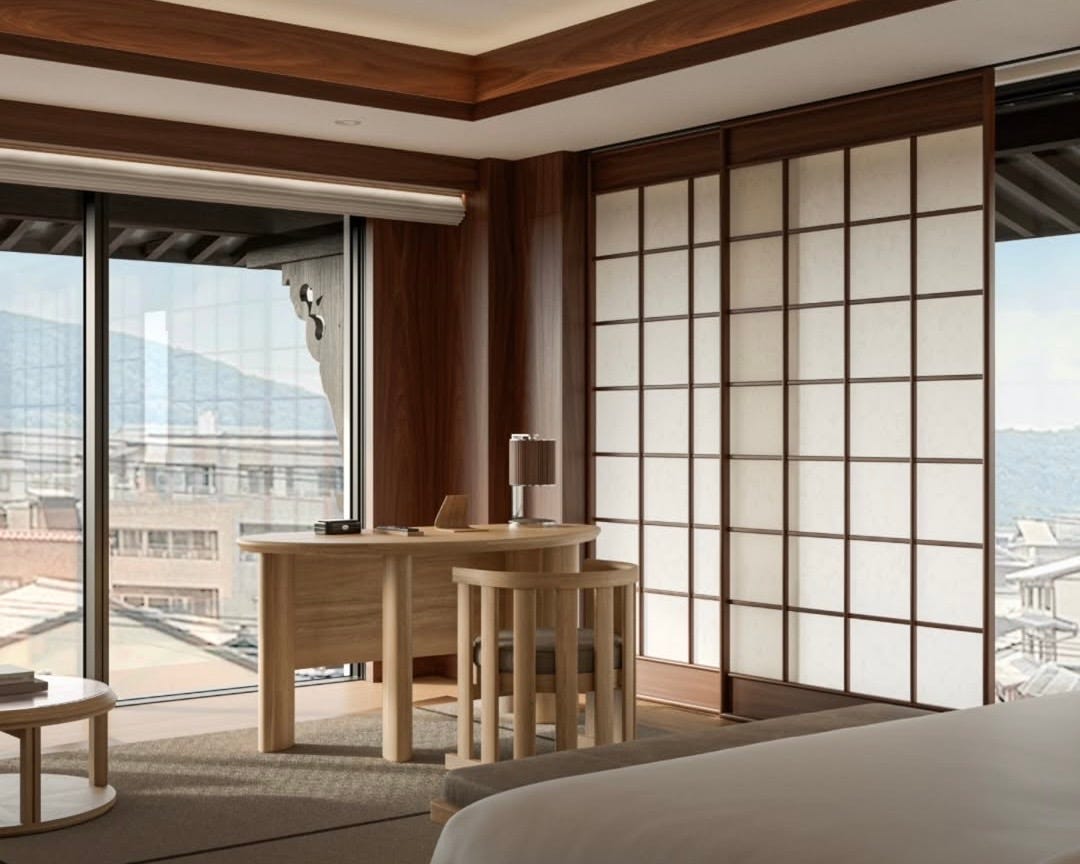
True to Capella’s philosophy, the project emphasizes cultural immersion over brand assertion. Architecture is expected to draw inspiration from traditional Japanese forms, with low-rise volumes, natural materials, and a strong relationship between interior spaces and gardens. Rather than reproducing a ryokan, Capella Kyoto appears to reinterpret Japanese hospitality through a contemporary lens - precise, tactile, and quietly luxurious. The design language favors balance and restraint, allowing craftsmanship and detail to speak without ornament.
Spaces & the lived experience
The experience at Capella Kyoto is designed to unfold slowly. Guest spaces are expected to prioritize light, texture, and spatial calm, encouraging reflection rather than stimulation. Wellness and dining are approached as extensions of Japanese daily life rather than stand-alone attractions, with an emphasis on seasonality, ritual, and sensory subtlety. Movement through the hotel mirrors the city itself - deliberate, softened, and deeply attuned to rhythm. What defines the stay is not programming, but presence.
Who this hotel is for
Capella Kyoto is intended for travelers who already understand Kyoto’s pace - or who are willing to learn it. It will appeal to aesthetes, culturally curious guests, and repeat visitors to Japan seeking depth rather than discovery. This is not a gateway hotel for first impressions, but a place for those who value silence, nuance, and emotional precision. Guests choose Capella Kyoto not to be entertained, but to be attuned.
Conclusion
With its planned opening in 2026, Capella Kyoto signals a mature approach to luxury hospitality in Japan. By embracing discretion over display, it positions itself as a natural extension of the city rather than an interruption. If successful, it will not redefine Kyoto - but quietly belong to it.