Introduction
In 2026, Four Seasons continues to refine its global footprint with a new wave of openings that lean less toward uniform luxury and more toward strong geographic identity. From ultra-remote coastlines to historic European landmarks, these upcoming properties reflect a clear editorial direction: each address is conceived as a destination in itself. Rather than multiplying similar resorts, the brand appears to be deepening its relationship with place, culture, and context. This next chapter signals not scale for its own sake, but a more nuanced vision of modern luxury hospitality.
The logic behind the selection
These new openings share a common thread: each represents a distinct way of experiencing luxury through geography. Whether floating at sea, embedded in protected natural reserves, restoring historic icons, or reinterpreting iconic leisure destinations, Four Seasons is clearly investing in properties with strong narrative potential. The emphasis is on rarity, cultural depth, and experiential contrast rather than replication.
The upcoming properties
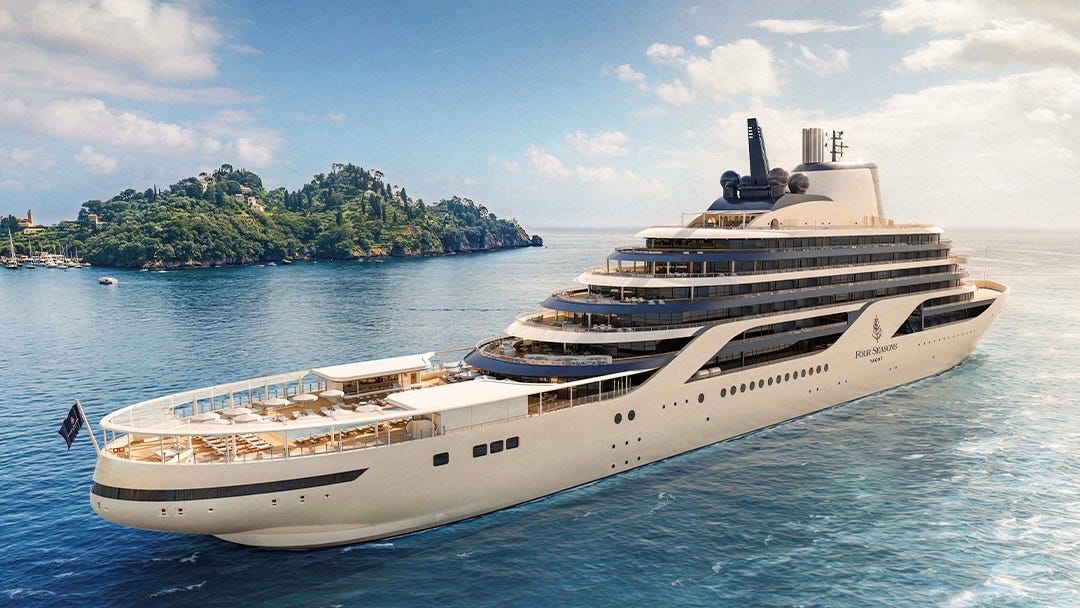
Four Seasons Yacht
The brand’s move into yachting marks a significant evolution, extending hospitality beyond land-based destinations. Designed as a floating Four Seasons experience, the yacht promises the intimacy of a private vessel combined with the service standards of the group. More than a cruise, it is conceived as a slow, curated journey where the sea becomes the setting rather than the spectacle.

Four Seasons Red Sea
Set along Saudi Arabia’s untouched Red Sea coast, this property is part of a broader vision centered on conservation and ultra-low-impact tourism. The surrounding environment - coral reefs, desert landscapes, and pristine waters - defines the experience. Here, luxury is framed through isolation and environmental awareness, appealing to travelers seeking destinations that still feel undiscovered.

Four Seasons Cartagena
In the heart of Colombia’s historic Caribbean city, Four Seasons Cartagena anchors itself in heritage and urban energy. Housed within restored colonial buildings, the hotel connects guests to the city’s cultural rhythm, architecture, and vibrant street life. It represents the brand’s growing interest in culturally rich cities beyond traditional luxury capitals.

Danieli, a Four Seasons Hotel
Few addresses carry as much symbolic weight as Hotel Danieli in Venice. Its transition into the Four Seasons portfolio signals a careful approach to heritage hospitality. Rather than reinventing the landmark, the project is expected to preserve its historic soul while introducing a quieter, more refined interpretation of luxury - one rooted in craftsmanship, history, and discretion.

Four Seasons Amaala
Located within Saudi Arabia’s ambitious Amaala development, this resort focuses on wellness, art, and transformative travel. Set against dramatic coastal and desert scenery, it is designed for guests seeking longer stays centered on regeneration rather than escape. The experience prioritizes space, privacy, and a strong connection to landscape.

Four Seasons Mykonos
Set on one of Greece’s most emblematic islands, Four Seasons Mykonos brings a composed, architectural lens to a destination often defined by excess. The project is expected to emphasize privacy, design, and a slower interpretation of Cycladic living, balancing sea views, clean lines, and restrained elegance. Rather than competing with the island’s social energy, it offers a more grounded alternative - one rooted in landscape, light, and calm.

Conclusion
With these upcoming openings, Four Seasons reinforces a clear editorial stance: luxury today is defined by context, not excess. Each project offers a different lens on travel - maritime, historic, urban, remote, or Mediterranean - while remaining anchored in the brand’s service philosophy. Together, they outline a future where high-end hospitality becomes increasingly place-driven, intentional, and quietly ambitious.